
Crypto risk management best practices are defined as the structured controls, position rules, and security protocols traders use to limit losses and protect assets in digital markets. Annualized volatility for cryptocurrencies ranges between 50–200%, compared to just 10–20% for equities. That gap makes cryptocurrency risk assessment a non-negotiable discipline, not an optional add-on. Frameworks like ISO 31000 and NIST's Cybersecurity Framework provide the structural backbone that professional traders adapt for digital asset portfolios. Without predefined rules, volatility does not just shrink returns. It eliminates them.
1. What are the top risk limits and position sizing rules?
The single most cited rule in crypto risk management is the 1–2% max risk per trade guideline. Crypto volatility at 50–200% annually means a single bad trade can wipe out weeks of gains if sizing is unchecked. Limiting each trade to 1–2% of total capital keeps any one loss survivable.
Portfolio allocation limits follow the same logic. No single major coin like Bitcoin or Ethereum should exceed 20% of your total portfolio. High-risk altcoins should be capped at 5–10% each. Crypto theft exceeded $1 billion in early 2026, and concentrated positions amplify both market risk and theft exposure simultaneously.

| Asset Category | Max Allocation | Risk Level |
|---|---|---|
| Bitcoin (BTC) | 20% | Moderate |
| Ethereum (ETH) | 20% | Moderate |
| Large-cap altcoins | 10% per coin | High |
| Small-cap altcoins | 5% per coin | Very High |
| Stablecoins / cash | 10–20% | Low |
Pro Tip: Set your position size before you enter a trade, not after. Predefined limits remove the temptation to "just this once" size up on a high-conviction call.
Retail traders who skip this step consistently underestimate emotional decision-making risks. Sizing rules are not about being conservative. They are about staying in the game long enough to compound gains.
2. How stop-loss orders and take-profit targets reduce emotional risk
Hard stop-loss orders are the most direct tool for removing emotion from trade exits. Professional traders set hard stop-loss orders at trade entry rather than relying on mental stops, because execution lag and emotional hesitation cost real money. A mental stop-loss is a plan. A hard stop-loss is a contract with the market.
Take-profit targets work the same way in reverse. Setting a target before entering a trade locks in your reward-to-risk ratio and prevents greed from turning a winning trade into a breakeven or a loss. The combination of a hard stop and a defined target creates a trade with a known worst case and a known best case.
Automated tools extend these controls across your full portfolio. Key features to look for in any crypto risk management platform include:
- Hard stop-loss and take-profit order automation
- Trade size calculators tied to account balance
- Real-time alerts for position limit breaches
- Audit logs that flag emotional trading patterns like revenge trading and FOMO
- Market replay tools for reviewing past trade decisions
Pro Tip: Review your stop-loss placement after every losing trade. If you moved a stop to avoid a loss, that is a behavioral red flag worth tracking.
Disciplineaiapp addresses this gap directly. Its automated trade auditing identifies emotional patterns and gives traders a structured review process after each session.
3. Why portfolio diversification is critical for managing crypto investment risks
Diversification in crypto is not the same as diversification in traditional finance. Within a single asset class with annualized volatility up to 200%, spreading across ten altcoins does not reduce systemic risk. When the market sells off, most tokens fall together.
True diversification for crypto traders means spreading across asset categories, not just coins. Allocating across Bitcoin, Ethereum, stablecoins, and DeFi yield positions creates genuine separation of risk profiles. Adding staking income or liquidity provision introduces yield that does not depend on price appreciation.
| Asset Type | Risk Profile | Correlation to BTC |
|---|---|---|
| Bitcoin (BTC) | Moderate volatility | Baseline |
| Ethereum (ETH) | Moderate-high volatility | High |
| DeFi tokens | Very high volatility | High |
| Stablecoins | Near zero volatility | None |
| Staking rewards | Low volatility income | Low |
Effective crypto asset management strategies also include holding a cash or stablecoin reserve. That reserve serves two purposes: it limits drawdown during crashes and provides capital to buy at lower prices.
- Keep 10–20% in stablecoins or cash at all times
- Avoid holding more than three high-risk altcoins simultaneously
- Rebalance quarterly or after any position grows beyond its allocation cap
- Treat DeFi positions as high-risk allocations, not passive income
4. Best practices for securing crypto assets against theft
Cold storage is the foundation of institutional-grade crypto security. Cold storage combined with multi-signature custody and regular security audits forms the baseline that serious traders and institutions use. Keeping assets on an exchange is a convenience, not a custody strategy.
The 10% rule for exchange exposure is widely cited by security professionals. Experts recommend keeping no more than 10% of liquid crypto capital on a single exchange, with seed phrases stored offline on metal backups. A metal seed backup survives fire, water, and physical damage that paper cannot.
"Boring security is the best security. Disciplined routines and hardware wallets prevent more losses than any complex solution." — Kroll Cyber Security
Blind signing is one of the most underappreciated attack vectors in crypto. Blind signing without human-readable transaction details exposes wallets to spoofing attacks. Hardware wallets that display clear transaction information before signing reduce this risk significantly.
Key security best practices for crypto traders include:
- Store the majority of holdings in cold wallets, not on exchanges
- Use a hardware wallet that displays full transaction details before signing
- Back up seed phrases on metal, stored in two separate physical locations
- Test wallet recovery by wiping and restoring from seed before storing significant funds
- Enable two-factor authentication on every exchange account
- Never click links in unsolicited messages about wallet activity
Testing wallet recovery before storing significant amounts takes 5–10 minutes and confirms your backup actually works. Most traders skip this step until it is too late.
5. How crypto-specific key risk indicators improve early warning
Traditional financial risk models do not map cleanly onto crypto markets. Crypto-native key risk indicators like exchange withdrawal latency, stablecoin peg deviation, and on-chain anomaly detection flag problems that standard portfolio metrics miss entirely. Monitoring these signals gives traders an early warning system that price charts alone cannot provide.
Exchange withdrawal latency is a practical example. When a major exchange slows or halts withdrawals, that is a liquidity signal. Traders who monitor this metric can reduce exchange exposure before a crisis becomes a collapse. Stablecoin peg deviation is another. A stablecoin trading at $0.97 instead of $1.00 signals stress in the underlying mechanism.
Scenario analysis and stress testing calibrated against historical crypto drawdown events produce better risk models than traditional financial methods. The 2022 Terra/LUNA collapse and the FTX failure are the two most instructive stress test scenarios available to crypto traders today. Running your portfolio through those scenarios reveals concentration risks that normal market conditions hide.
6. Why the risk management process itself is the most neglected practice
Risk management is a four-step process: identify, analyze, assess, and treat. Most retail traders complete the first two steps and stop. Treatment planning, which means deciding in advance what you will do when a specific risk materializes, is the step that separates consistent traders from those who recover from trading losses reactively.
Treatment planning looks like this in practice: if Bitcoin drops 30% in 72 hours, you have a written rule that says you will not add to losing positions until the price stabilizes above a defined support level. Without that rule, emotion fills the gap. With it, you execute a plan.
Avoiding overtrading is itself a risk treatment. Traders who overtrade during volatile periods increase their exposure to slippage, fees, and emotional errors simultaneously. Defining a maximum number of open positions at any time is a treatment plan, not a restriction.
Key Takeaways
Effective crypto risk management requires predefined position rules, layered security controls, and a written treatment plan for each identified risk before market conditions force a decision.
| Point | Details |
|---|---|
| Cap single-trade risk at 1–2% | Limits any one loss to a survivable amount given crypto's extreme volatility. |
| Use hard stop-loss orders | Set stops at trade entry to remove emotional hesitation from exit decisions. |
| Diversify across asset categories | Spread across BTC, ETH, stablecoins, and DeFi to separate risk profiles. |
| Keep max 10% per exchange | Reduces theft and liquidity risk from any single platform failure. |
| Follow the four-step risk process | Identify, analyze, assess, and treat risks with written plans before they occur. |
The discipline gap is where most traders actually lose
The uncomfortable truth about crypto risk management is that most traders already know the rules. They know the 1–2% sizing guideline. They know stop-losses matter. They know cold storage is safer than exchanges. The problem is not knowledge. The problem is execution under pressure.
I have watched traders with detailed risk plans abandon every rule the moment a position moves against them. The plan disappears the second emotion enters the trade. That is not a knowledge failure. That is a discipline failure, and it is far more common than any technical mistake.
The traders who consistently protect capital are not the ones with the most sophisticated models. They are the ones who treat their risk rules as non-negotiable, the same way a pilot treats a pre-flight checklist. You do not skip items because you feel confident today.
What actually works is building systems that enforce rules automatically, so your emotional state in the moment becomes irrelevant. Automated stops, position size calculators, and trade audit logs do not care how you feel about a trade. They execute the plan you made when you were thinking clearly. That is the real edge in building profitable trading habits.
— Tony
How Disciplineaiapp supports your risk management in practice
Knowing the rules and following them consistently are two different skills. Disciplineaiapp is built for the second one.
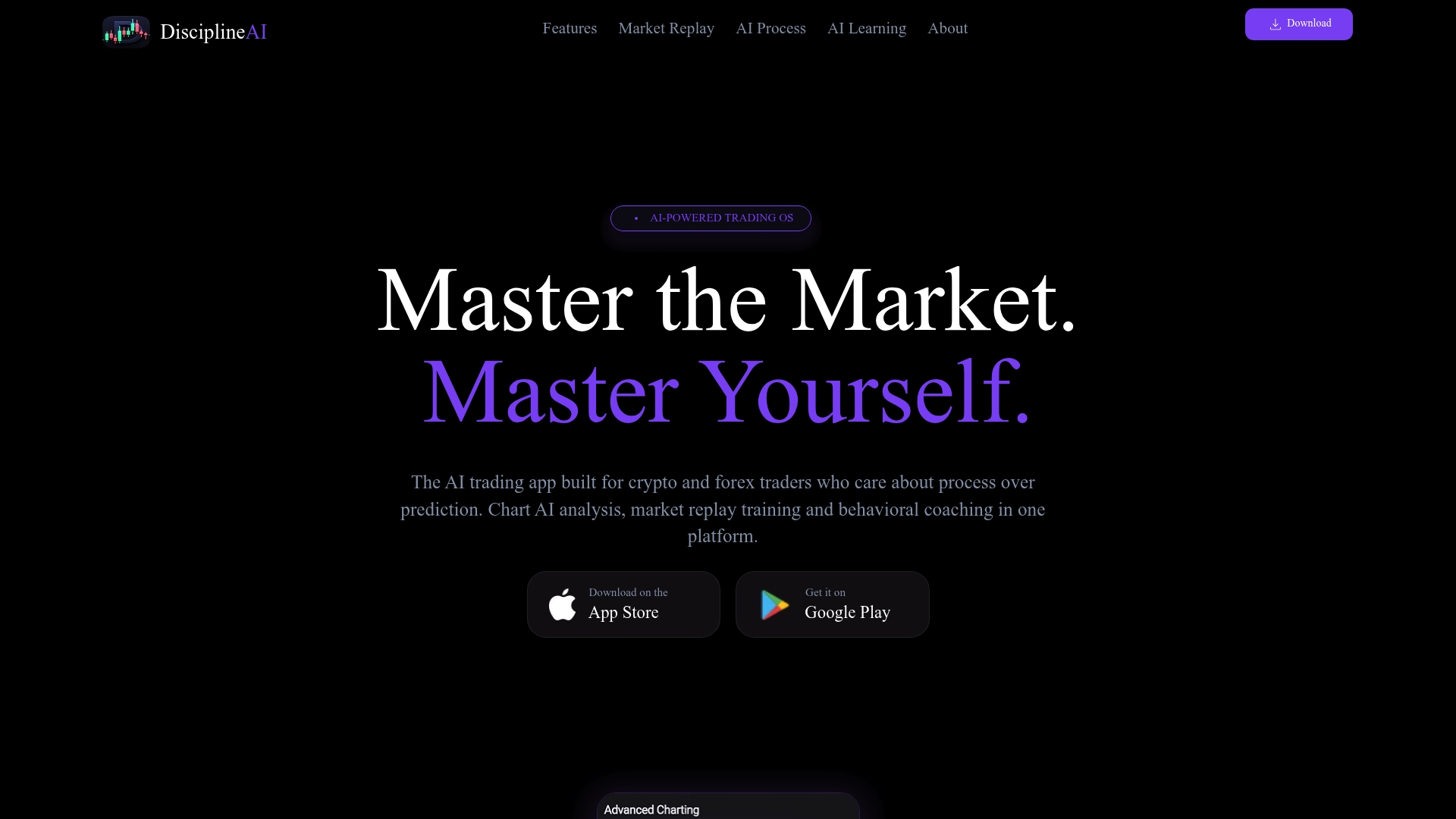
The platform combines AI analytics with behavioral coaching to audit every trade you make. It identifies emotional patterns like revenge trading and FOMO, then gives you a structured review so you can see exactly where discipline broke down. The market replay feature lets you replay past trades and practice better decision-making without real capital at risk. For traders who want to close the gap between what they know and what they actually do, the Disciplineaiapp trading journal is the most direct tool available. Risk management only works when you execute it every time, not just when it is convenient.
FAQ
What is the 1–2% rule in crypto risk management?
The 1–2% rule limits each trade's maximum loss to 1–2% of total capital. Given crypto's annualized volatility of 50–200%, this rule keeps any single loss from causing serious portfolio damage.
How much crypto should I keep on an exchange?
Experts recommend keeping no more than 10% of your liquid crypto capital on any single exchange. The rest should be held in cold storage to reduce theft and platform failure risk.
What is a hard stop-loss order?
A hard stop-loss is an automated sell order placed at trade entry that executes without manual intervention. Professional traders prefer hard stops over mental stops because they remove emotional hesitation from exit decisions.
Why does diversification work differently in crypto?
Most crypto assets are highly correlated during market selloffs, so spreading across many tokens does not reduce systemic risk. True diversification requires allocating across asset categories including stablecoins, DeFi positions, and staking income.
What is blind signing and why is it dangerous?
Blind signing means approving a transaction without seeing its full details. It exposes wallets to spoofing attacks where malicious contracts drain funds. Hardware wallets that display complete transaction information before signing prevent this risk.